
Inflation, a word commonly heard and read publicly, affects our day to day existence in various ways. Due to this therefore, there is need to also understand the effects of inflation, which is the general trend of prices for goods and services.
As a continuation of the previous post or as a new one, in this revelation, I would like to discuss the impact of rising prices on consumers especially between United States of America and Canada and the measures that can be employed.
Understanding inflation: Some notes about author and the book
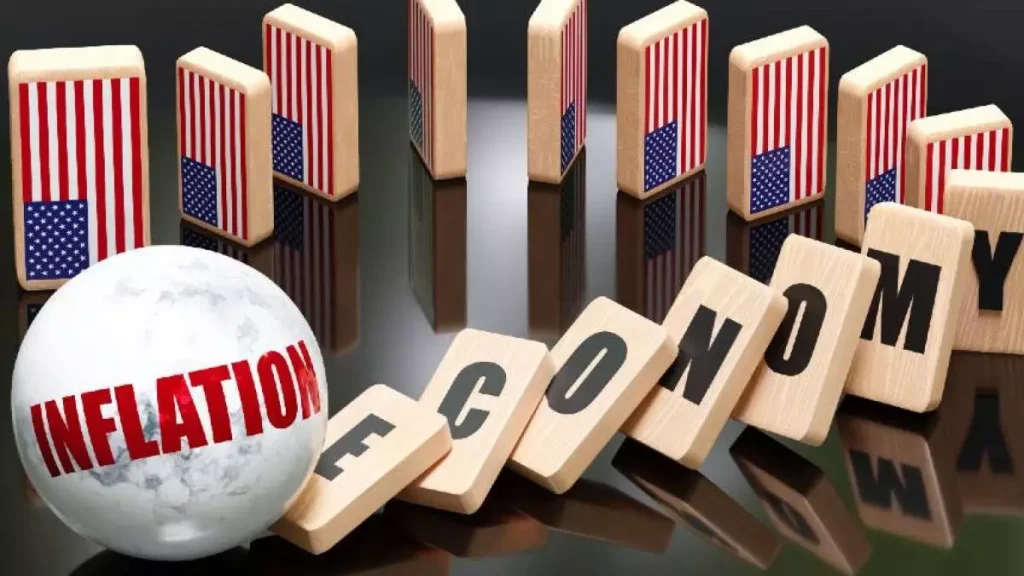
Inflation is defined as a continued rise in the average of price level for goods and services over some time in an economy. Basically, it translates into a situation where the general value of money reduces hence being able to purchase or accomplish less than you were previously able to.
Within the United States and Canada, the tasks connected with inflation regulation involve central banks. This they do through the operations on money stock by managing the rates of interest as well as other tools that are available for use. In circumstances where the inflation rate is high, the central banks may increase interest rates to slow down the rates of activity hence the rate of inflation.
The source of inflation and its effects
There are many reasons why the process of inflation is realized. These may include market forces such as supply and demand forces, cost of production and government activities. For instance, an increase in number of consumers ushers in the increase of prices by business entities. Thus, higher costs of ingredients are likely to result in the costs being transferred to customers by the companies.
Furthermore, governmental behaviours like implementing fiscial stimulus measures increases the amount of money in circulation which dear up spending hence inflating the prices. Foreign exchange also play a role; when the domestic currency is weaker as far as other currencies are concerned this may imply that the amount of imported goods that shall have to be paid for is higher leading to inflation.
Hence, in the case of the US and Canada, both have had to bear inflationary pressure due to disruption of supply chains and shortages of employees possibly due to the COVID-19 impact. This knowledge assists when trying to work out how to handle the existing increased costs of living.
How central banks respond
The inflation rates in a country can also be controlled through the use of the commercial banks’ tools by the Federal Reserve in the United States of America and the Bank of Canada. The first fundamental approach is accomplished by controlling the interest rates. Through this, borrowing costs go up making spending and borrowing lower to arresting an over-heated economy.
Another approach is based on the direct interventions through open market operations which presupposes purchase and sales of government securities with an aim to affect the volume of money in circulation. This helps to eliminate excess money from the economy and consequently lower inflation rates, if selling of these securities is conducted when inflation is high.
The monetary consequences
Another impact is the inflation which in simple terms relates to the overall buying power of a unit of a specified currency. Inflation leads to the situation whereby the same amount of money will be able to purchase a smaller number of goods than it use to.
Lest the consumers in the US and Canada are read the rising diction, price increases are likely going to be witnessed in the food, housing, and transport sectors. Thus, while prices go up, individuals find it harder to manage their finances and plan how to spend the money.
Knowledge of these factors enables you to manage your personal financial in the right manner such as managing your expenditure, or identifying an investment that has inflation hedge. Education is strength and awareness makes a big difference in the harsh realities of life including the issue of inflation.
Managing money and investing appropriately in inflationary period
Speculative investing is a topic that should be approached rather cautiously since it is usually associated with the periods when the level of inflation is constantly increasing. Equities in companies that can pass increased cost onto the consumer stand to benefit during inflation like companies offering essential services or goods.
Real estate is yet another asset class who can act as an inflation hedge. The property values and the rental incomes for the properties generally have inflation-linkers, which serve as a hedge. But, care should be taken and some research done in an effort to be able to identify good shares and the market situation.
Last, go through a portfolio rebalance to ascertain which types of assets are likely to perform when the inflation rates are high. Silver and gold are noble metals and are used as a physical form of money because their value gras not affected even when the purchasing power of money is reduced.
