
Fintech companies in Canada are quickly evolving and revolutionizing the financial industry by proposing new value added services that enhance consumers’ utility, opportunity, and speed in the sphere of finance. Introducing the forward-looking benefits these FinTechs generate for Canadians in managing their money, investing and transacting.
These new types of financial services could be traced to factors such as proper government policies, strong start-up culture, and major use of mobile technology among the population. Since the customers are demanding more efficient and essentially personal, convenient financial services, the emergence of various fintech companies is accompanied by the desire to provide even better services.
Canada’s fintech ecosystem
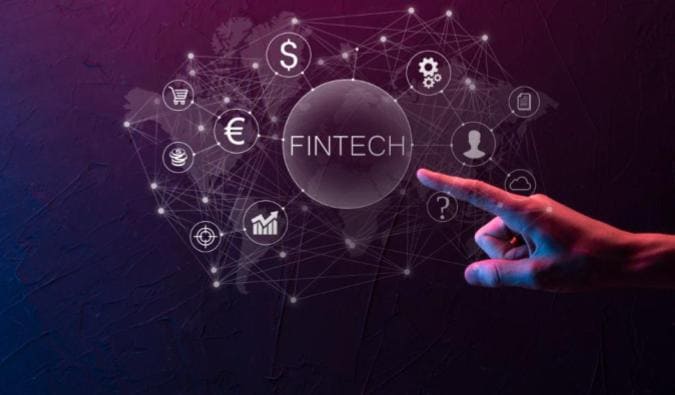
It is for this reason that the fintech ecosystem in Canada is rapidly growing due to the favorable infrastructure that has been put in place. The country has several technology centres among them being Toronto, Vancouver and Montreal where several fintech start-ups are already arising.
Besides the presence of strong start-up culture, which has been mentioned earlier, Canadian emergence has other advantages, including active government support for financial technology. Digital charter initiatives such as the one mentioned above and regulatory sandboxes give fintech startups room to operate and test their novel ideas and models without compromising much on protectionist overtones that might hamper their innovative capacity.
Also, the major Canadian financial institutions are becoming proactively digitalized as a means of targeting clients securely. Most large banks are pursuing fintech integration and ‘white label solutions’ either to support their core business or to forge completely new strategies.
Going through the goals of government policies
This paper has found that public policies are central to understanding the evolution of the fintech sector in Canada. Hearings such as regulatory sandboxes permit fintech firms the chance to operate their products without precisely falling under the risky area of regulation.
The outstanding examples include the Canadian Digital Charter that was created to strike a fair measure between innovation and protection by outlining the standards for using and protecting the data and AI. Some of these regulation assist in developing the confidence of customers and hence, people see new technologies in the financial sector as more trustworthy.
Besides, the government support through the funding and incentives to maintain and grows the fintech industries. Subsidies and tax incentives for research and development activities persuade more start-ups to do so. Thus, it can be concluded that Canadian financial sector benefits from a favorable regulatory environment and a wide range of financial stimuli promoting innovation.
Major vendors of the market
There is emerging talent which is spearheading the fintech industry in Canada is as follows; Canada for example, Wealthsimple has in a very short span of time disrupted the investment space with its simple, inexpensive investment offering.
Another firm of note is Koho a mobile banking app that provides a Koho no fee prepaid Visa card with features such as cash back and smart budgeting among others. Koho was design to solve this problem by proving Canadians an easier way of managing their personal finances and save.
Also avails credit scores check and, financial product recommendation based on the credit score of the customer. Thus, together with data and analysis, Borrowell assists the users in understanding credit profiles and providing them with financial recommendations which, in its turn, improves users’ financial literacy.
Fintech trends affecting the fintech industry
There are some new trends noticeable that will define the future advance of fintech in Canada. Take, for example, Open Banking which is gradually emerging and advanced as it facilitate the sharing of financial data between financial organizations and third-party firms.
Another large trend embraces the usage of the blockchain. Blockchain has an effective way of providing secure methods of completing the transactions thus reducing cases of fraud that affect financial structures.
However, artificial intelligence and machine learning are rapidly changing the scenarios of customer service and fraud prevention. The sales services are strongly delivering the advantages of artificial intelligence through chatbots and virtual assistant in customer support and service the algorithms also support in fraud detection and prevention through machine learning.
An analysis on the effects of blockchain technology
In the case of financial services, it is believed that blockchain technology has great potential. It also has a decentralised structure, which adds to its security and openness, both of which are vital for the prevention of fraud and safe provision of financial operations.
For example, blockchain can facilitate cross-border payments since they take less time and are cheaper since they cut out the middleman. This is especially more so for trade that takes place across different countries, and for people sending money to a friend or relative abroad.
Also, again, through the perspective of creating unalterable records, blockchain can enhance identification procedures. Thus, using blockchain-based ID databases helps to protect customers from ID theft and optimize the procedures of joining the company services. Therefore, it is befitting to conclude that blockchain technology will continue to rise in importance to the world of fintech in Canada.
